Robots for the first lunar base
Machines
Scratch: autonomous construction machines for the Moon. What they do, for whom.
Terranova builds Scratch: autonomous construction machines for the Moon, robots that work as a swarm, run by one shared software. Scratch prepares the site before people arrive and keeps working once people are there.
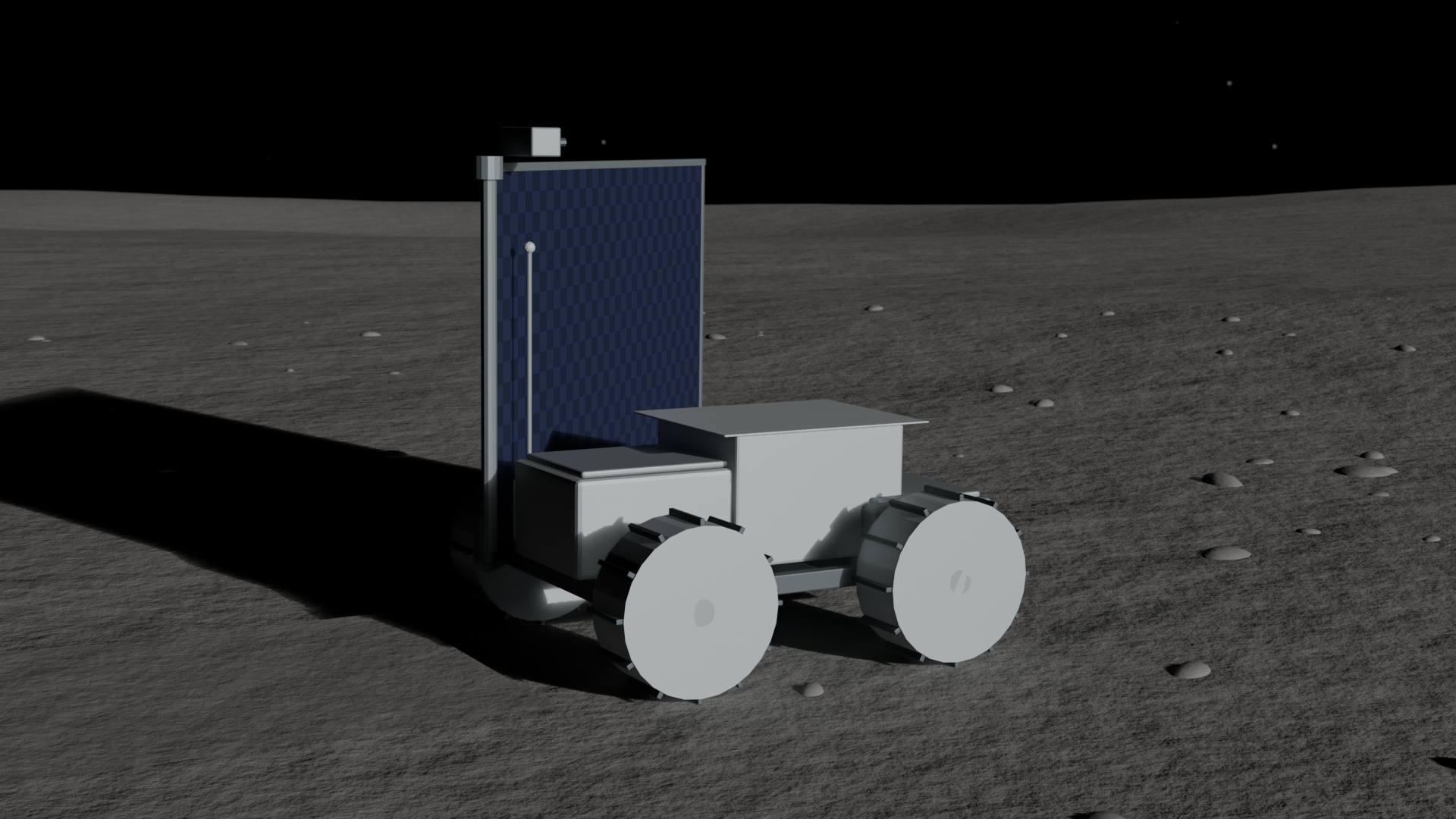
What Scratch builds
- Landing pads. A level, certified surface for the next lander to set down on.
- Blast berms. A wall between landing pad and base catches the ground thrown up by landings and launches and protects everything already standing.
- Trenches and foundations. For cables, pipes and anything that carries load.
- Pits. For a reactor, for radiation shielding, for protected storage.
- Cover. Ground over station modules as protection against radiation, meteorites and heat loss.
Scratch masters all of these jobs with one machine. Every special-purpose machine sent up in addition costs a landing of its own.
How Scratch works
For years, with nobody on site. A radio command from Earth takes seconds to arrive; a wheel in soft ground sinks faster than that. So the robots decide for themselves, and they do so by rules we validated in the digital twin before the first machine is built. Several machines work as one system: what one learns, all of them know.
They survive the lunar night on their own. At the south pole the darkness at the target site lasts up to ten days at a time, at temperatures that destroy any unprotected electronics. A machine that does not survive it works for three weeks. Ours are built for years.
They are designed from the ground up for low gravity. On the Moon everything weighs a sixth as much, and a machine that needs its own weight as a tool is useless there. Ours are light enough to fly as payload on a European or American lander, and strong enough to work where no construction machine has ever worked.
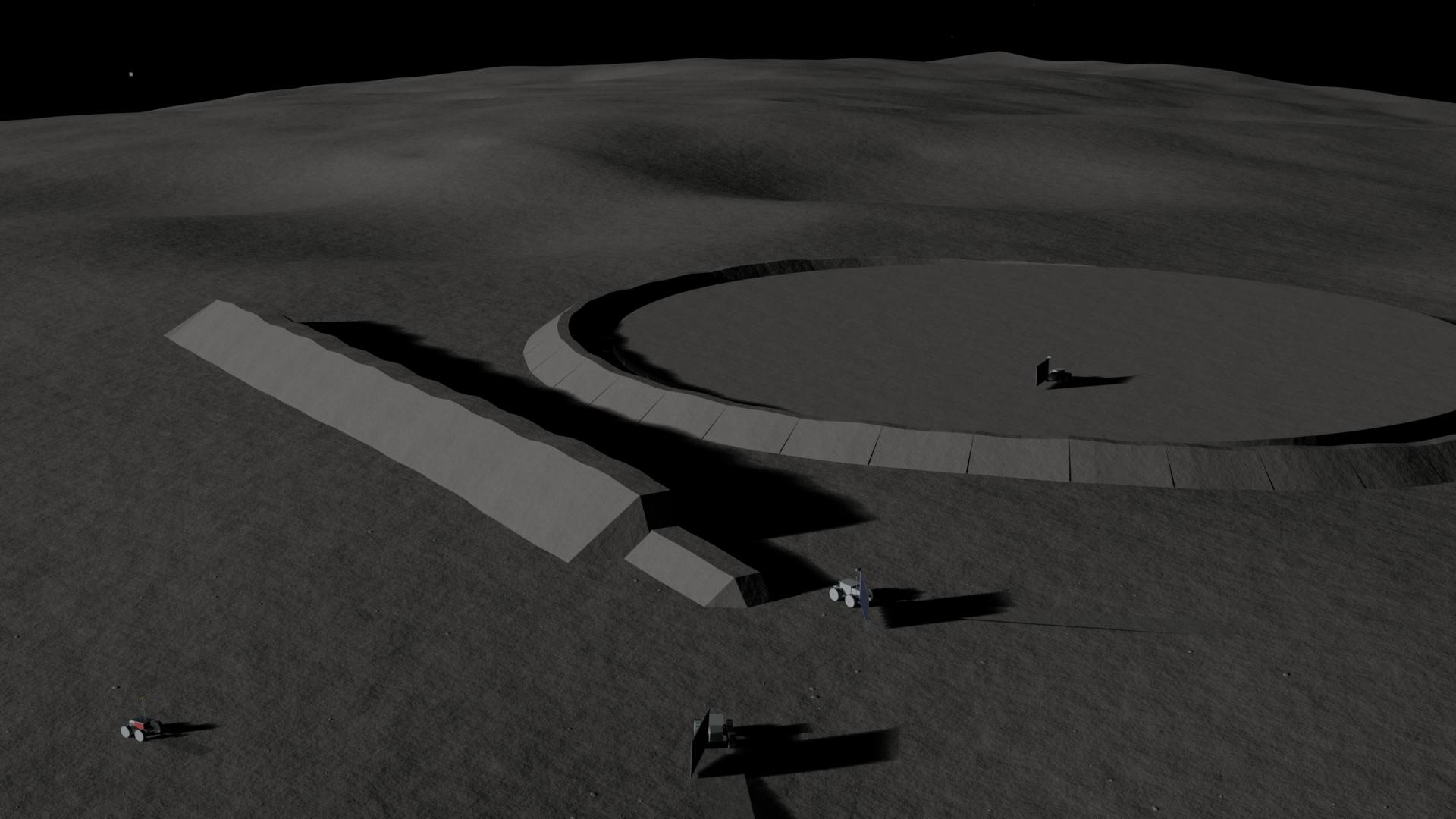
Who needs Scratch
Space agencies and lander operators who take a groundwork machine as payload. Mission planners who need to know early whether a site works. Every surface mission that depends on prepared ground: reactor, oxygen production, station modules.
The machine ties itself to no particular lander. It brings all the interfaces it needs, so it fits missions on both sides of the Atlantic without restrictions.
Where we stand
We have simulated the machine, its construction site and a full year of operations at the real target location, on NASA terrain data, through every lunar night. The digital twin shows it working across more than 1,500 tested mission variants.
We have not measured anything yet. That is the next step: our own test rigs, first measurements, a prototype. We say so openly, because in spaceflight the difference between calculated and measured decides everything.