Robots for the first lunar base
The first lunar base will not fail on the rocket. It will fail on the ground.
Humanity is going back to the Moon, this time to stay. Before anyone can live there, something has to prepare the ground. On Earth that work is done by construction machines and the people who drive them. On the Moon there is nobody. Terranova builds the robotic system that does it instead.
$1.2 M
is what every kilogram landed on the Moon costs today
2,600 to 15,000 t
of ground have to be moved for a single base
over 1,500
mission variants tested in the digital twin
The mission
Every rocket, every lander, every station module is built on Earth and flown to the Moon. The ground it all has to stand on is not. It lies there unsurveyed and uneven, and at every landing it turns into a projectile. A lunar base needs thousands of tonnes of moved ground before the first module is usable. Nobody builds the machines that can do that up there today.
The machines
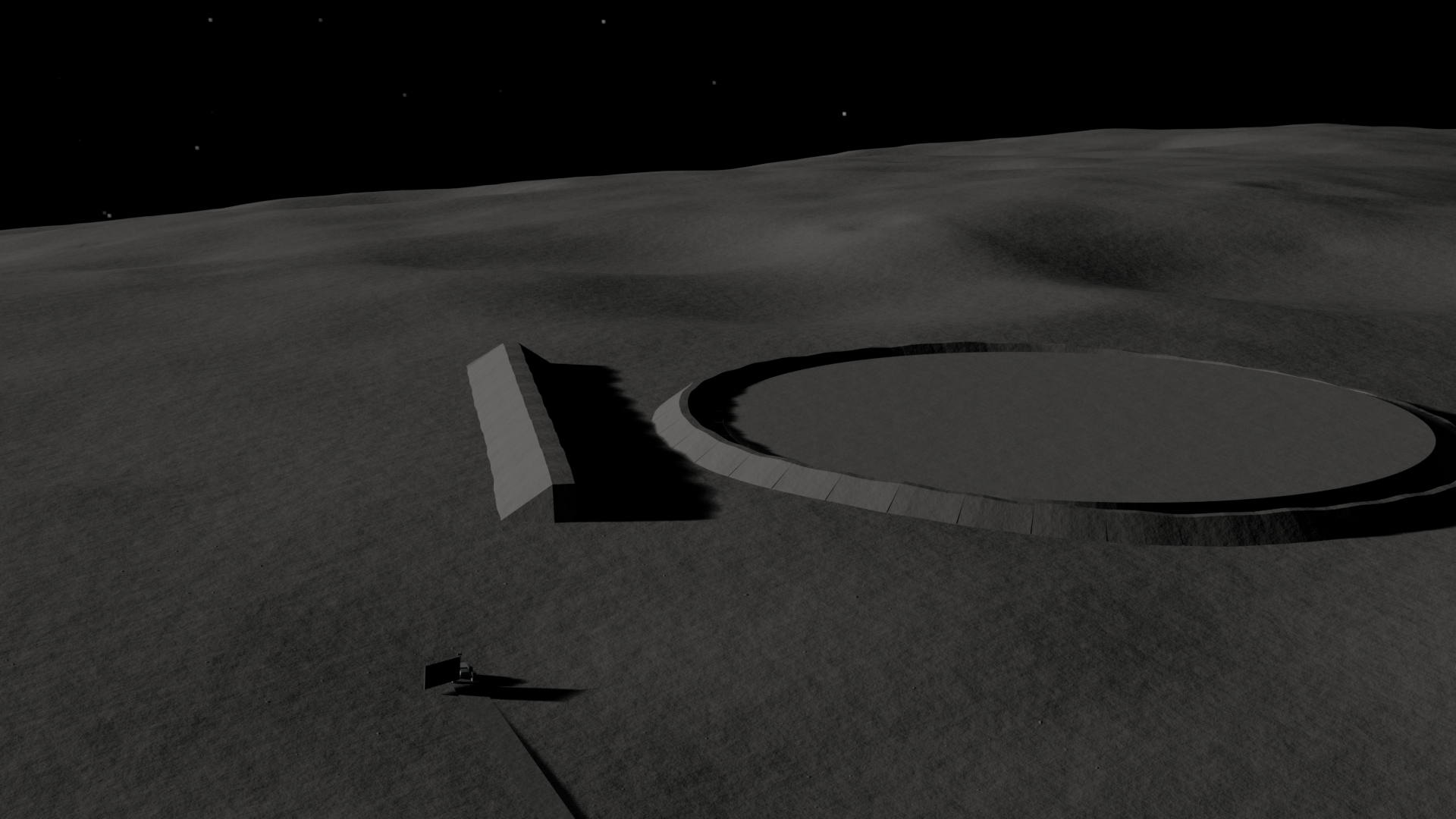
Our robots are called Scratch: autonomous construction machines for the Moon that work together as one system. They lay out landing pads, raise blast berms, cut trenches, dig pits and cover structures. They work for years with nobody on site and survive the lunar night on their own. The hardware is designed for a sixth of Earth’s gravity, yet light enough to fly as payload. The real core is the software that runs the swarm.
Where we stand
We have simulated reference missions with a full year of operations at the real target location, through every lunar night. The digital twin works, and every capability of the swarm carries its uncertainty. Our contributions to NASA software have been accepted, our datasets on the lunar south pole are open. The next step is our own test rigs and first measurements. We say openly that we have not measured anything yet, because in spaceflight that exact difference decides everything.
Contact. Terranova is based in Munich. Space agencies, partners, investors and press can reach us through the contact page.